Role Requirements
Define which courses or programs are required, recommended, or optional for each work role.
Map work roles to required, recommended, and optional learning in one employee training matrix, then review requirement coverage alongside connected learning activity and records.
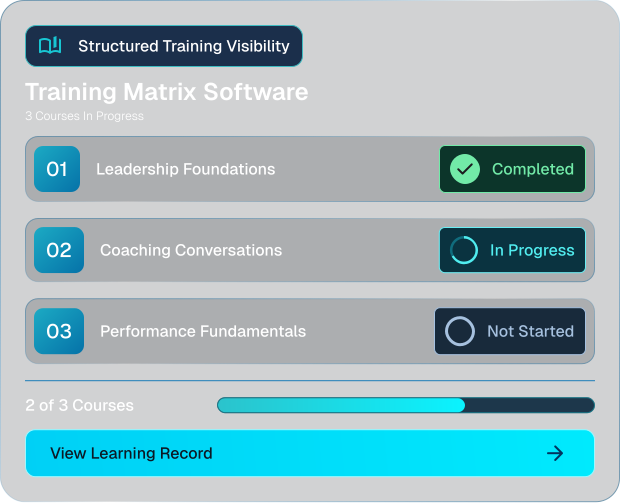
Connect work roles, training requirements, employee coverage, and learning records in one structured Learning Matrix view that fits the broader TraineryOPS training-operations layer.
Define which courses or programs are required, recommended, or optional for each work role.
Review how employees are covered against role-based training requirements associated with the work they perform.
Keep requirement context connected to completed learning and ongoing training history.
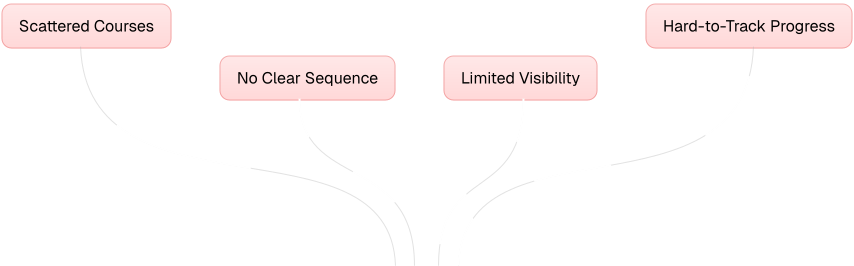
Use learning matrix software to connect work roles with training requirements inside the broader TraineryLMS learning environment, giving L&D teams a clearer view of expected learning and coverage gaps.


Organize an employee training matrix around the work roles people perform, using a practical skills matrix approach instead of disconnected requirement lists.
Distinguish required, recommended, and optional learning so compliance training requirements and other role-based expectations remain clear.
Review training requirements against employee training tracking data to identify where expected learning is complete or still outstanding.
Keep role-based training requirements connected to learning activity insights and completed training history.
Use the Trainery Learning Matrix as a role-based training matrix for mapping learning requirements, while using a broader skills matrix and taxonomy framework when workforce-skill structure also matters.
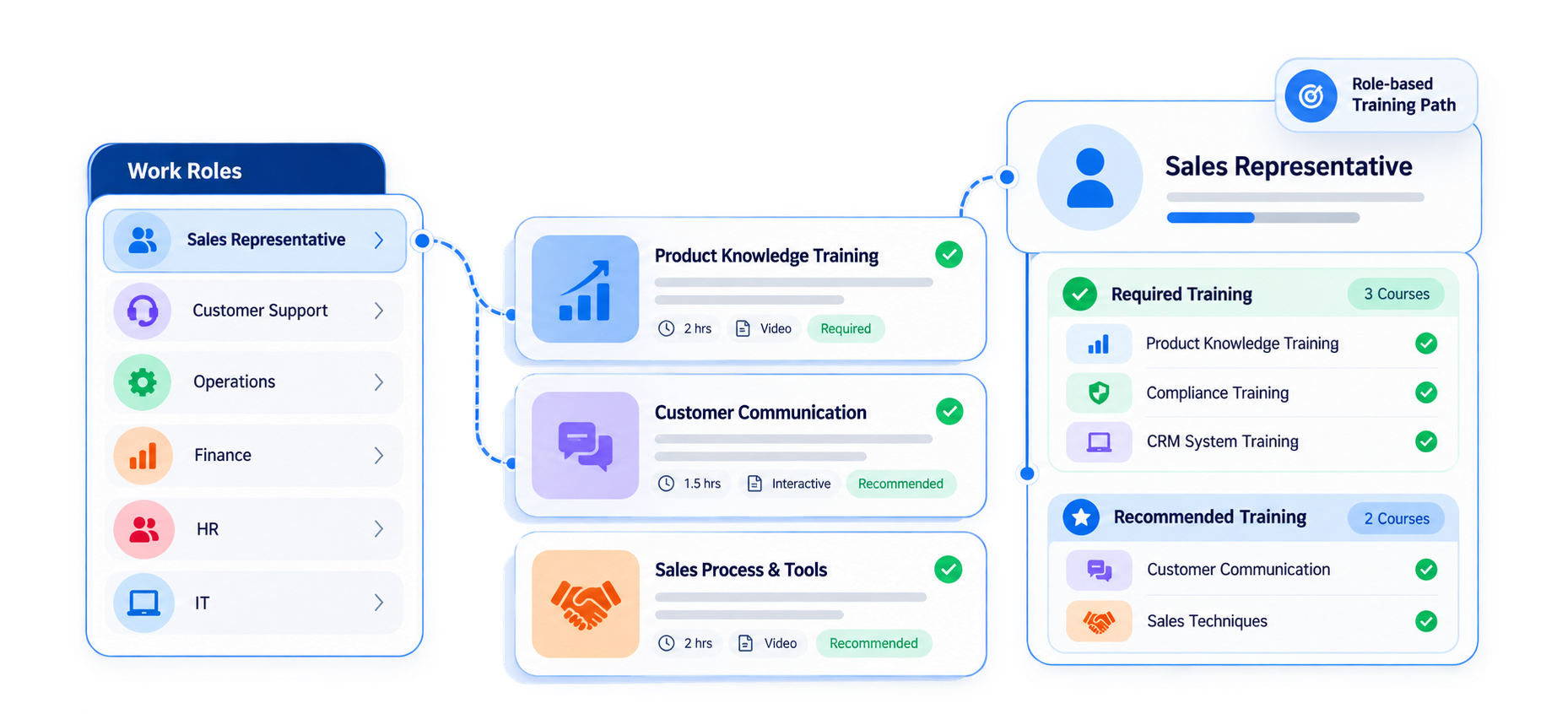
Map courses and training programs to the work roles that require or recommend them.
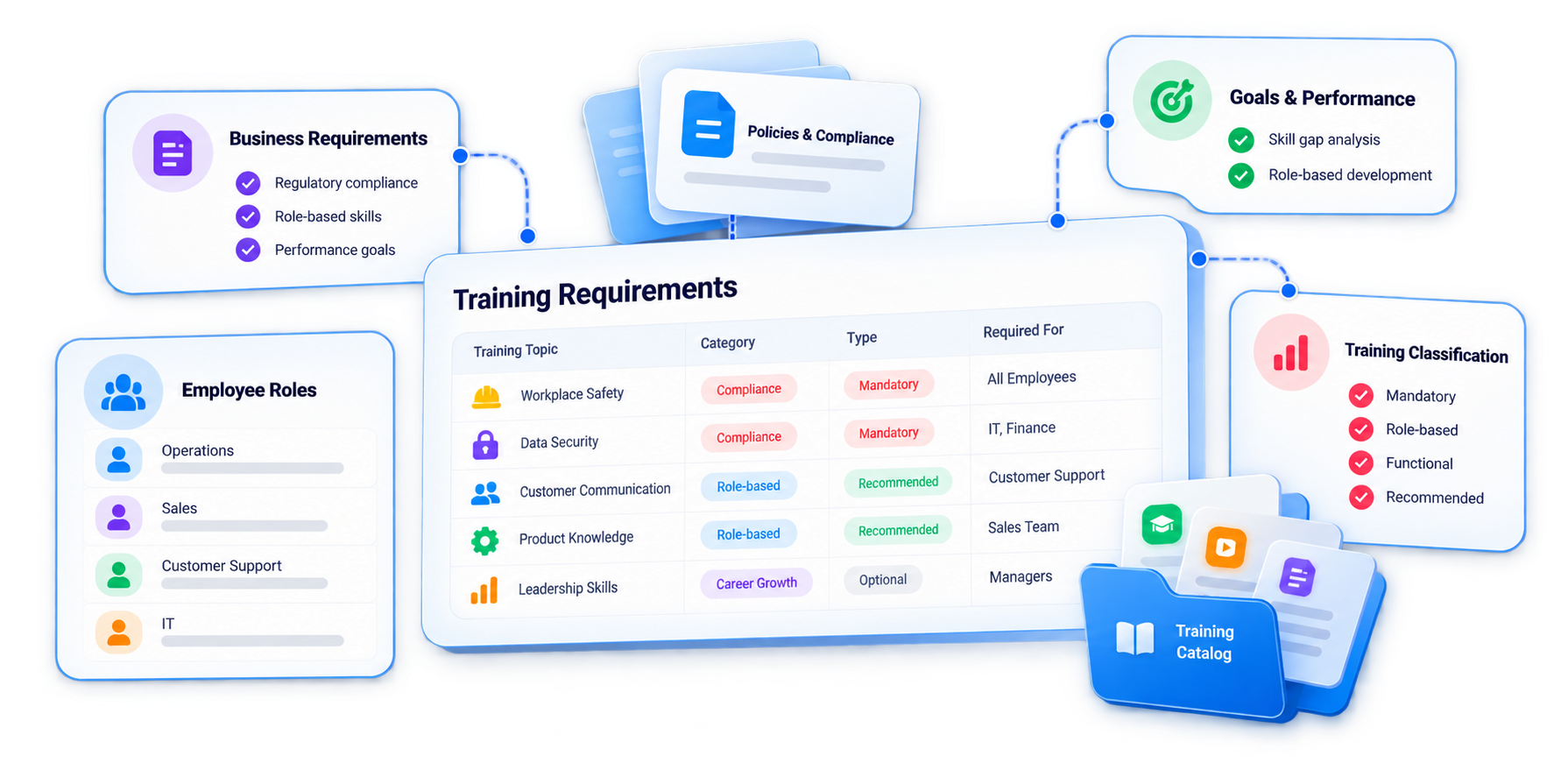
Classify learning as required, recommended, or optional so the training requirements matrix can feed into structured learning paths where appropriate.
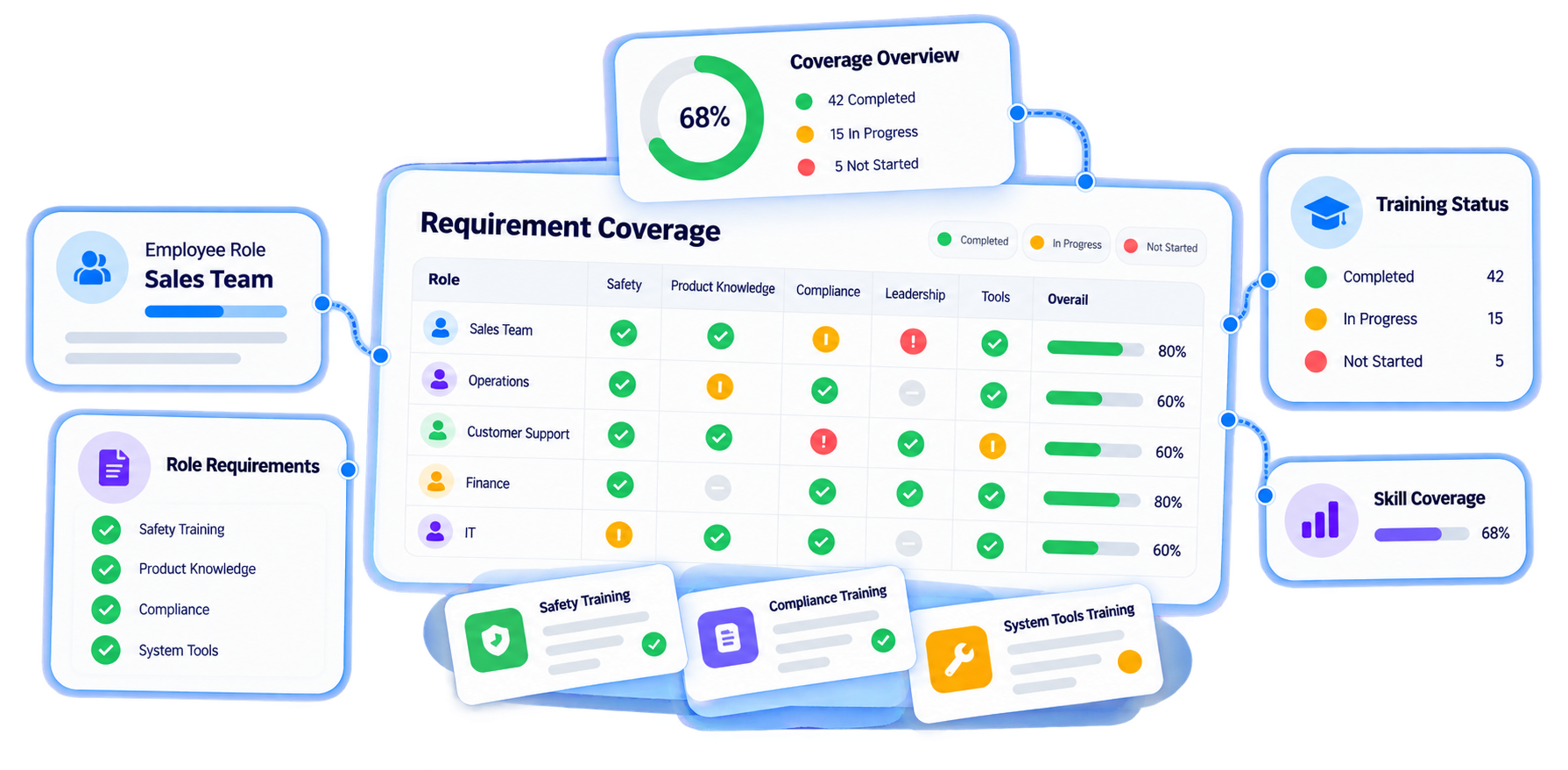
Review role-based training coverage as employee learning activity changes, then use those gaps to shape personalized learning paths.
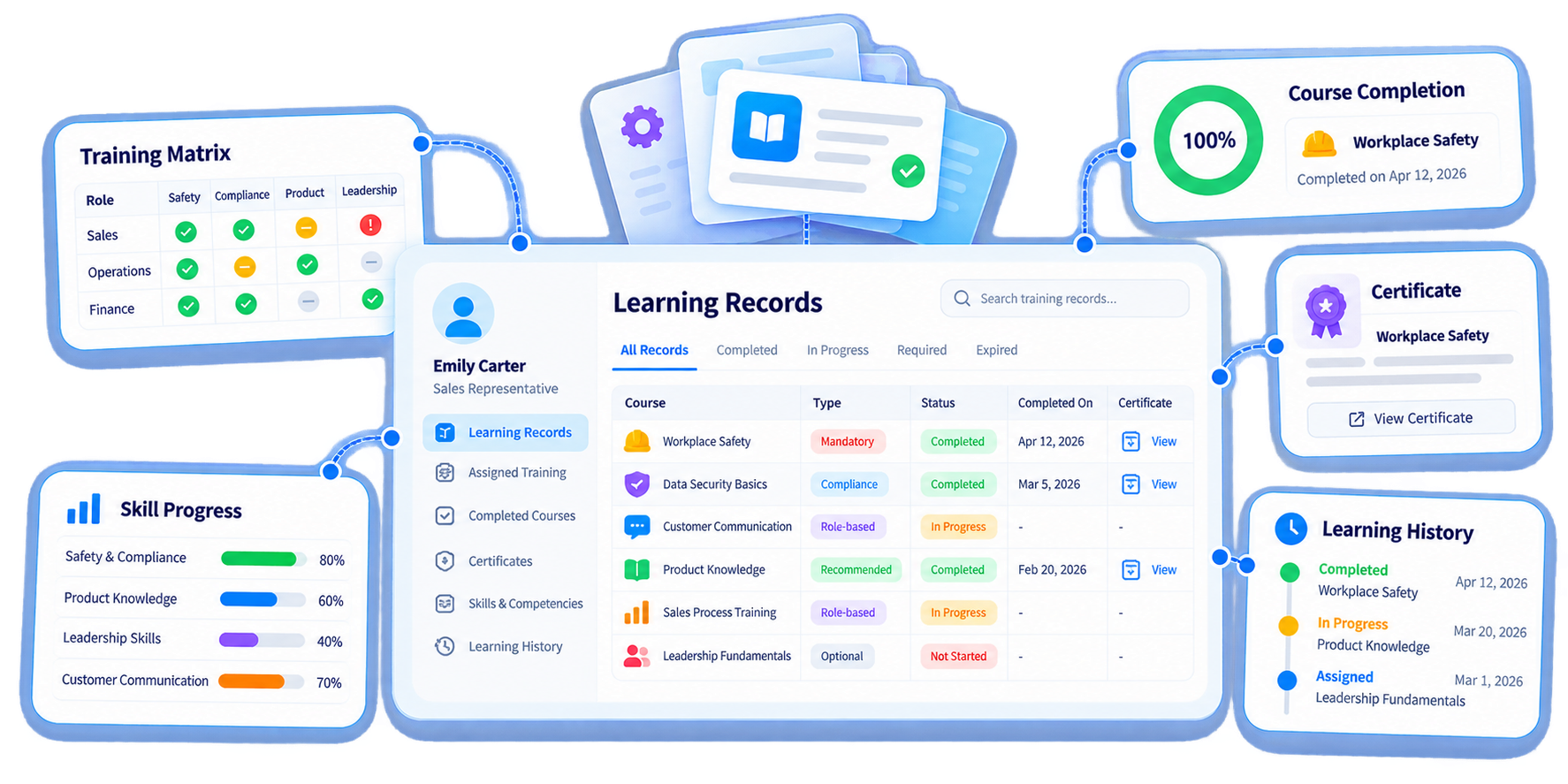
Connect matrix requirements with Learning Records so completed training remains part of the employee's ongoing history.
Move from work-role definition to mapped training requirements, employee coverage, completion visibility, and connected learning records in one training-operations workflow.
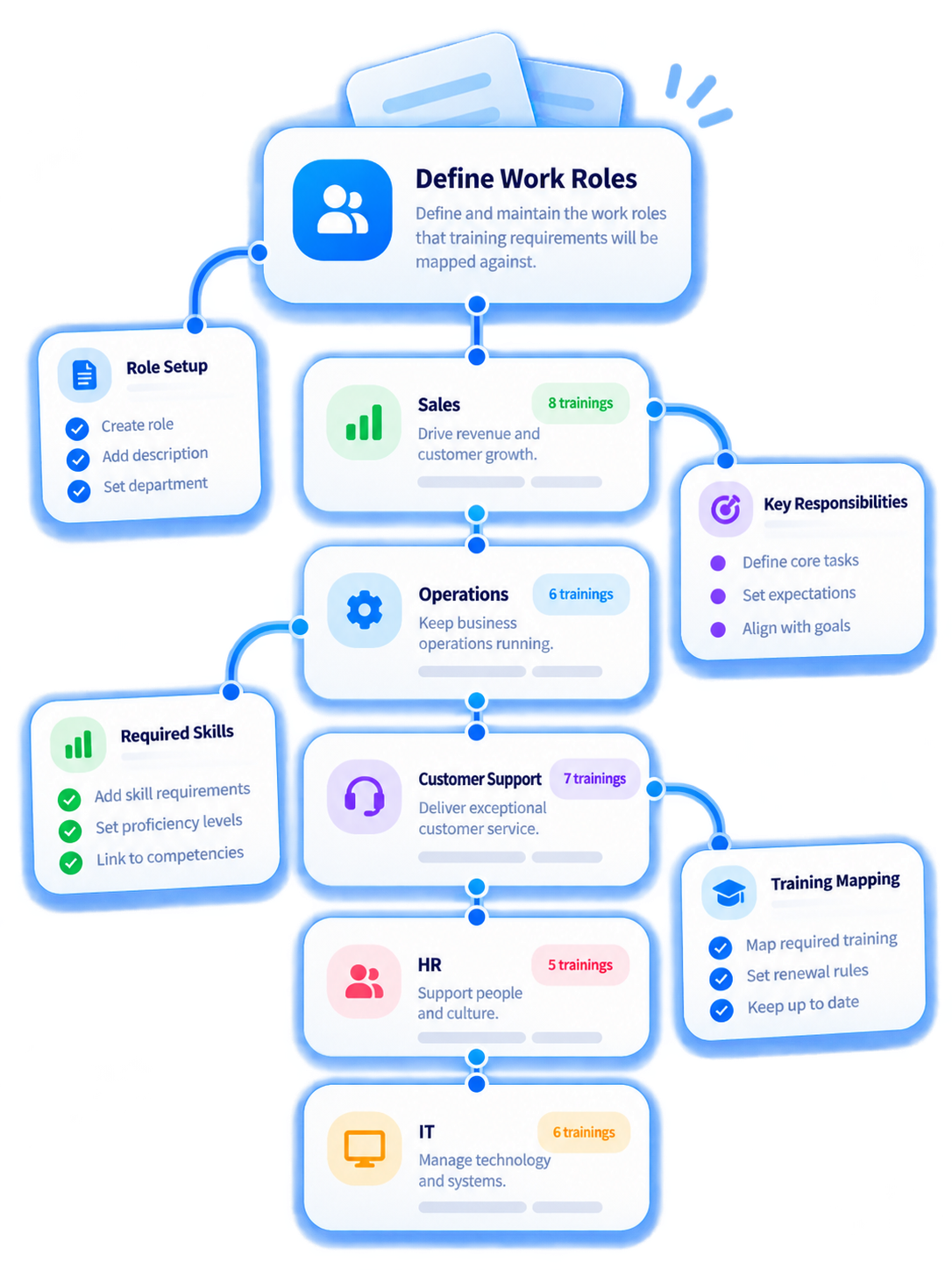
Define and maintain the work roles that training requirements will be mapped against.
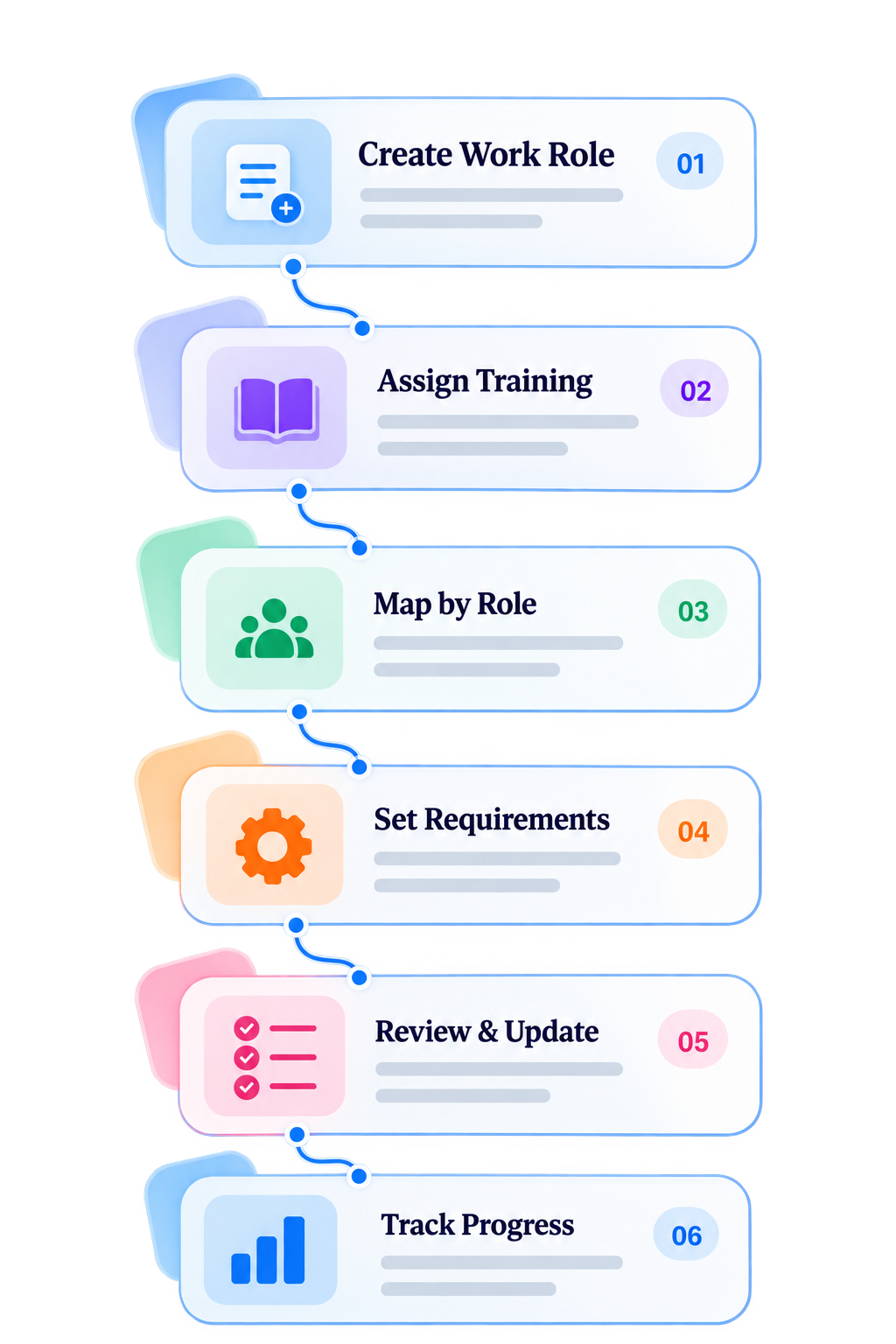
Map courses and programs to each role as required, recommended, or optional learning.
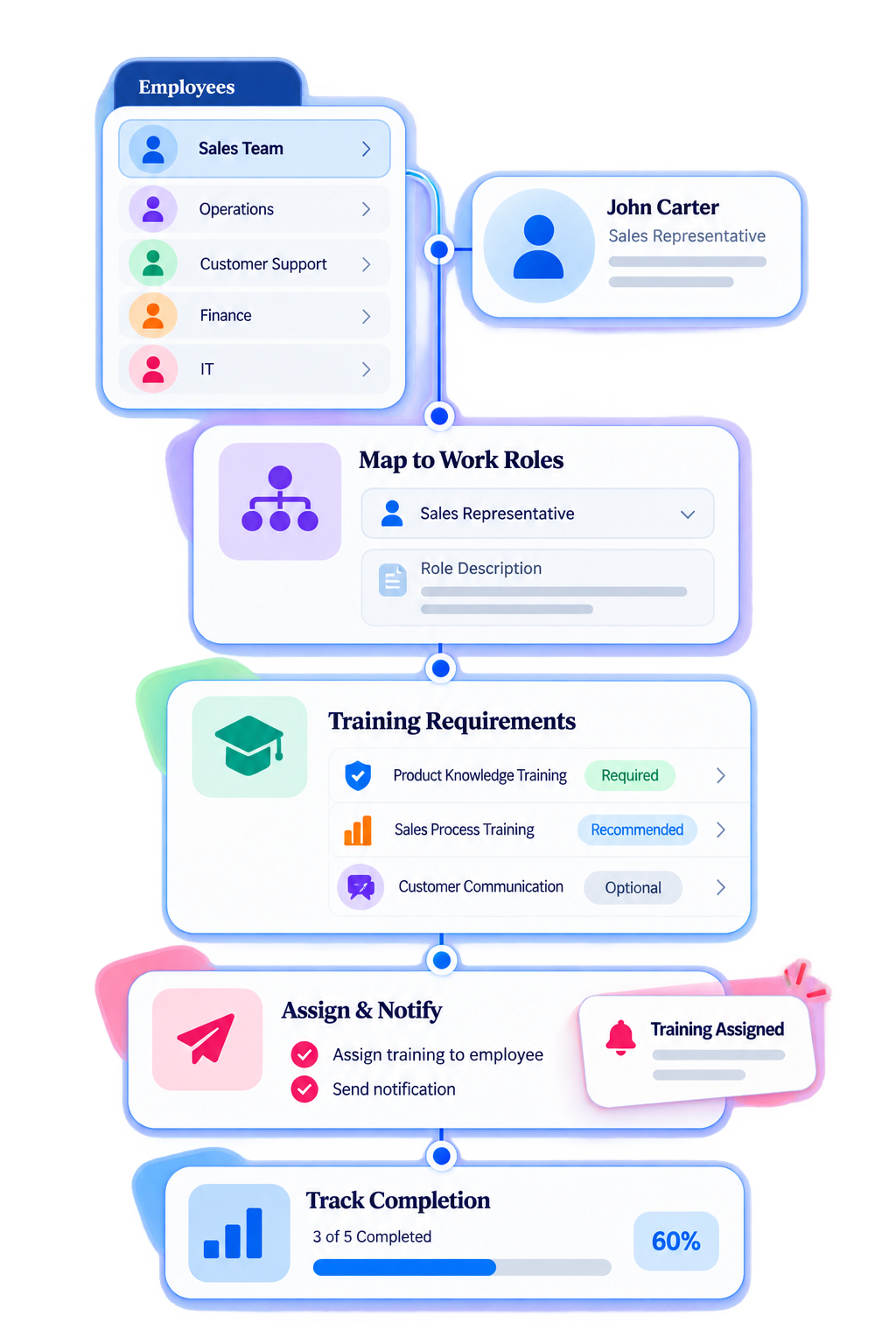
Connect employees to the work roles that determine which training requirements apply, then use skills gap analysis to identify broader workforce gaps.
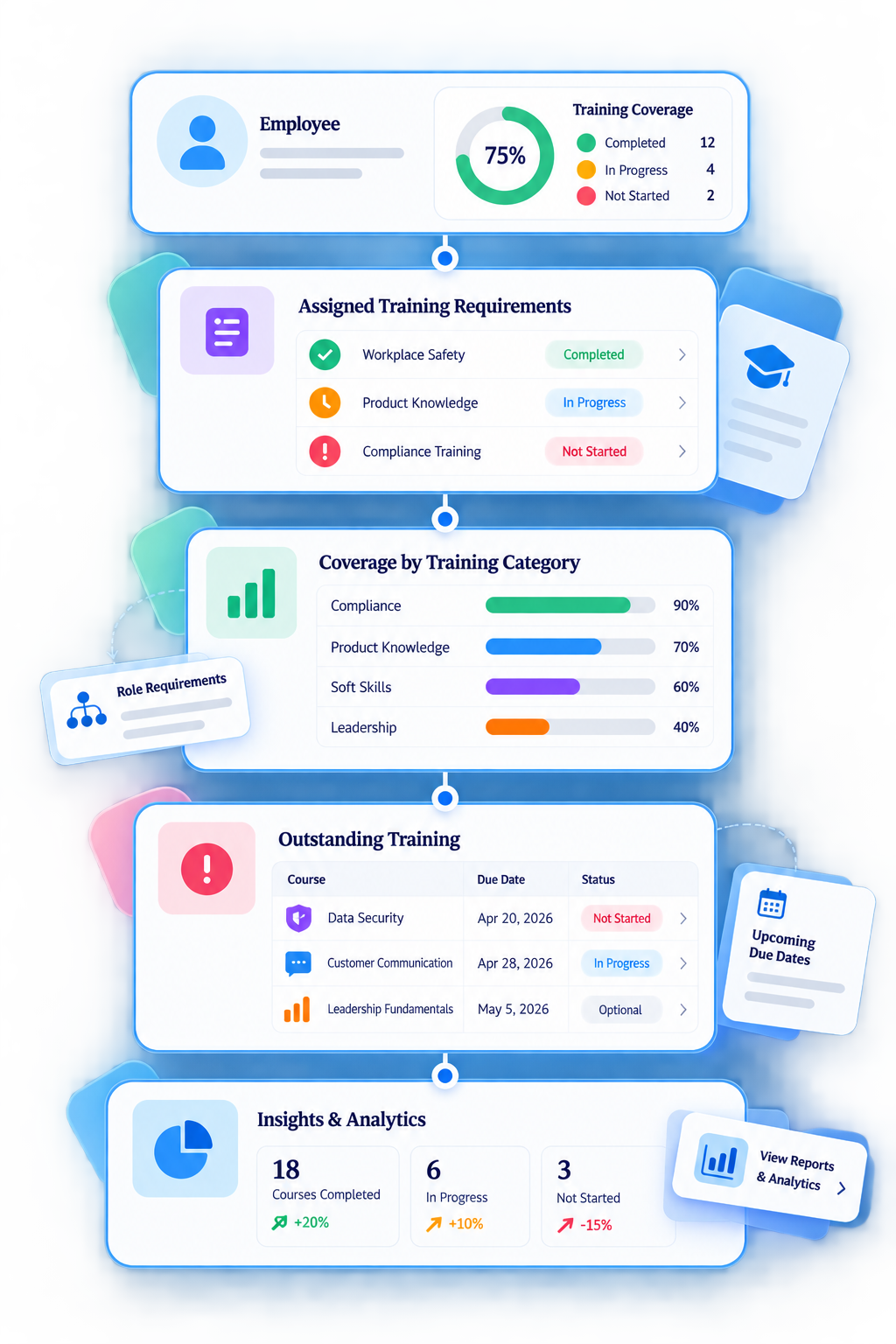
Review requirement coverage as assigned learning is completed or remains outstanding.
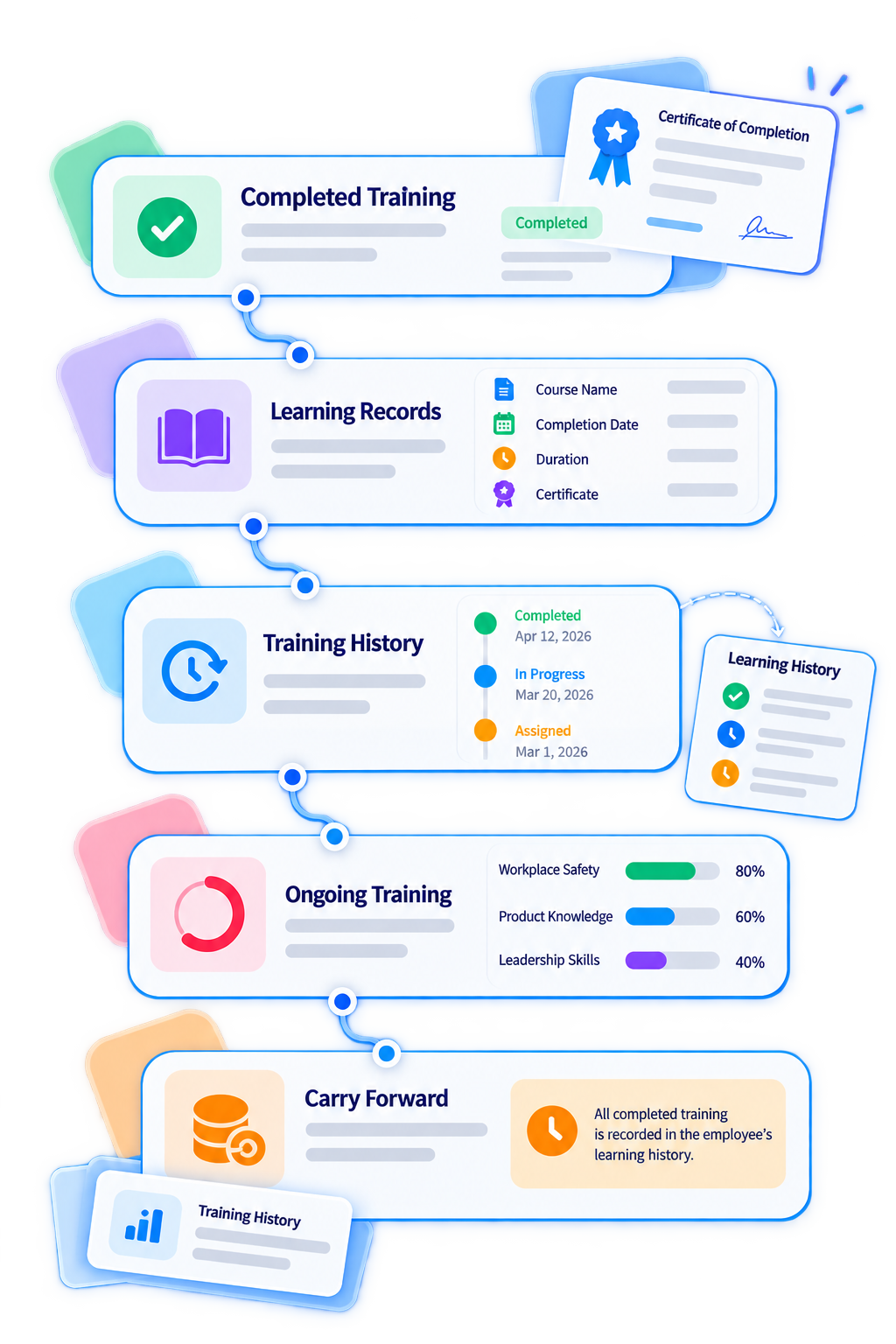
Keep completed training connected to Learning Records for ongoing employee training history.

See how Trainery brings its Learning Matrix into a connected environment for courses, learner activity, completion records, and ongoing learning history.