
Control Access
Limit internal access to personal information according to role and need-to-know requirements.
.svg)
Protect learning and training data with documented technical and organizational safeguards, encryption in transit and at rest, access controls, security monitoring, and defined incident-response commitments.
.svg)
Learning management system security affects employee data, learning records, credential information, coaching activity, training operations, and the systems connected to them.
Trainery maintains administrative, physical, and technical safeguards for Customer Data and uses cloud infrastructure with security controls appropriate to the Platform. Security evaluation should still confirm the controls, data flows, contractual requirements, and deployment details that matter to your organization.
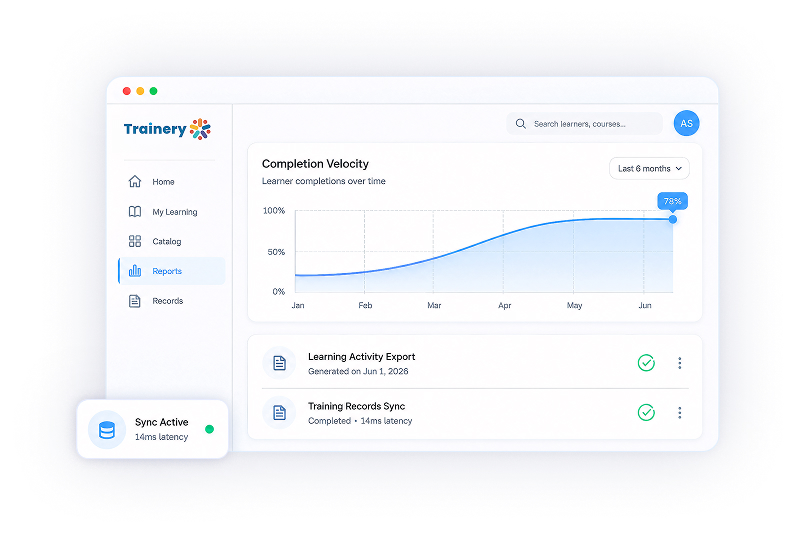

Keep completed learning visible beyond the individual course or event by connecting training activity to an ongoing learner record.
A secure LMS needs controls that cover how information is accessed, transmitted, stored, monitored, and handled when a security event occurs.
Limit internal access to personal information according to role and need-to-know requirements.

Use encryption at rest to reduce exposure of stored personal information.
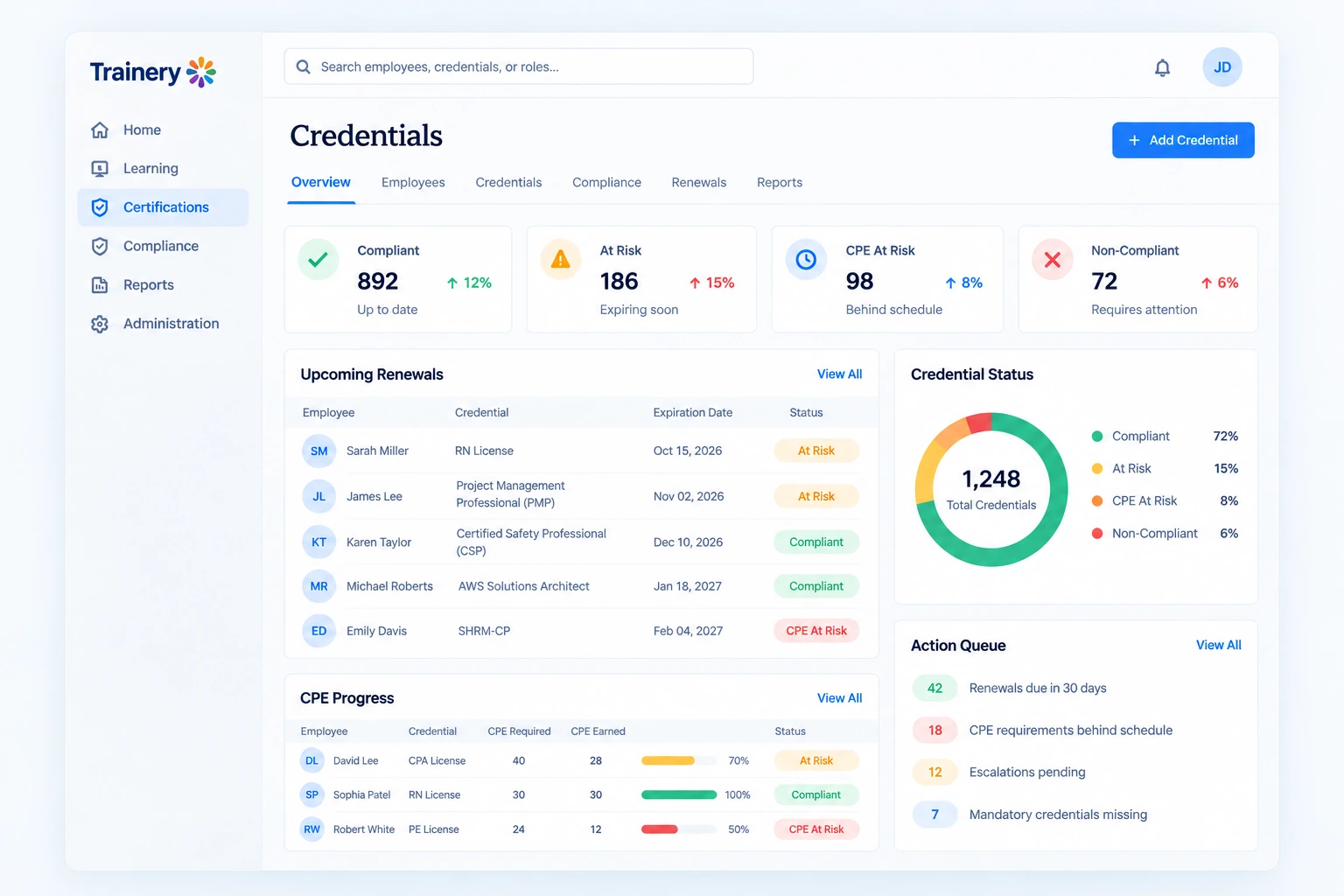

Use HTTPS/TLS encryption to protect personal data in transit.

Conduct ongoing security assessments and vulnerability monitoring to identify potential risks.
Security requirements vary by organization, industry, deployment, data type, and internal policy. Trainery's documented controls provide a starting point for a structured security review.
Review the access model, user roles, administrative responsibilities, and identity requirements relevant to your deployment.
.png)
Confirm how your organization expects information to be protected in transit, at rest, and throughout its lifecycle.
.png)
Review the cloud environment, deployment scope, data flows, and any organization-specific infrastructure requirements.
.png)
Confirm notification, escalation, internal-response, and contractual requirements for security incidents affecting Customer Data.
.png)
Trainery's Privacy Policy applies across the Trainery Platform, including TraineryLMS, TraineryTMS, TraineryCoaching, TraineryCredentials, TraineryOPS, TraineryCORE, and TrAI. Security review should reflect the modules, users, integrations, and data flows included in your deployment.
Review the controls around course activity, learning records, registrations, events, and other training data used by your implementation.

Review how certification, license, renewal, compliance, and related workforce records are handled within the deployment.
Include coaching records, engagement information, and other coaching-related data in the security review where those workflows are used.

Review the security implications of supported integrations and the data exchanged with external HR, messaging, calendar, or meeting systems.

Where TrAI or other AI-enabled workflows are in scope, confirm the data, permissions, contractual terms, and security requirements that apply before deployment.

Evaluate Trainery's documented security and data-protection measures against your organization's access, encryption, infrastructure, incident-response, and data-governance requirements.
.svg)


.svg)
