

.svg)
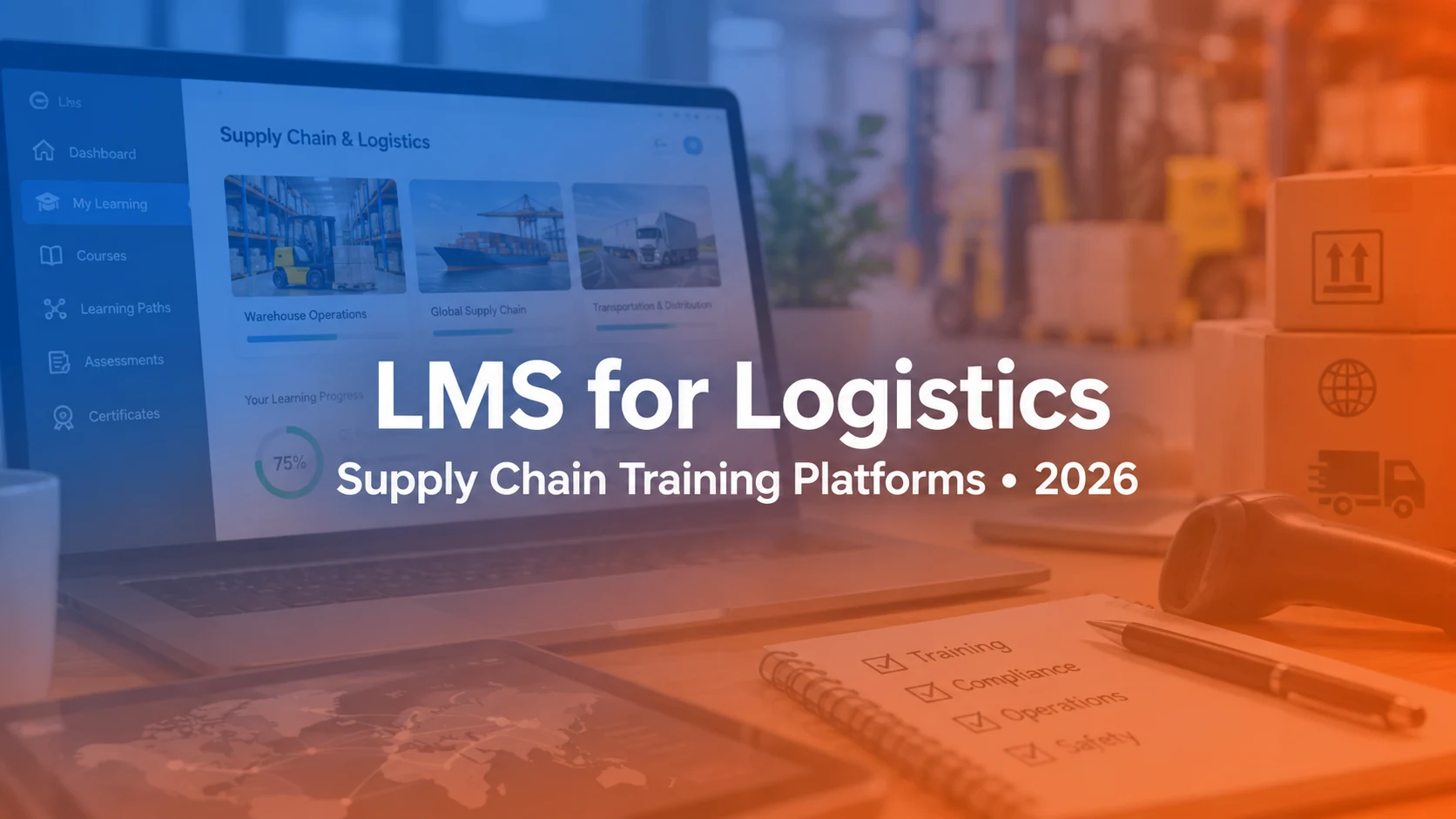

The best LMS for logistics is not simply the platform with the longest feature list. Logistics, warehousing, transportation, distribution, and supply-chain teams often need to train deskless employees across multiple facilities, document mandatory learning, manage recurring qualifications, support practical instructor-led training, onboard contractors, and roll out process changes without slowing operations.
That makes logistics training software an operational system as much as a content-delivery system. A warehouse training LMS may need to work on shared devices, support location- and role-based assignments, preserve historical evidence, connect digital and practical training, and show managers exactly where overdue or expiring requirements exist.
This 2026 comparison evaluates ten platforms that can fit different logistics and supply chain training models. Trainery.ai publishes the guide and Trainery appears first, so that commercial relationship is disclosed. Public vendor documentation was reviewed on September 26, 2026. This is a software-selection guide, not legal or safety advice; organizations should define required training, qualification, and recordkeeping rules with the appropriate safety, compliance, HR, legal, and operations stakeholders.
How we evaluated LMS platforms for logistics and supply chain training
We focused on the workflows that matter when training must operate across warehouses, distribution centers, fleets, terminals, plants, field teams, contractors, and multiple shifts.
For a structured procurement process, use the LMS vendor evaluation and RFP guide, LMS security checklist, and LMS migration checklist alongside the logistics-specific scenarios below.
10 best LMS platforms for logistics and supply chain training
| Platform | Best-fit scenario | Main strength to evaluate | Workflow to test |
|---|---|---|---|
| Trainery | Digital learning connected to operational training | LMS, ILT/VILT, credentials, compliance, learning paths, and reporting | Can a warehouse role change update learning, live sessions, credentials, and manager reporting together? |
| Docebo | Large frontline and multi-location enterprises | Frontline/mobile learning, offline access, certifications, renewals, and multi-location consistency | Can deskless learners complete required training and maintain certifications across locations with limited connectivity? |
| Cornerstone Learning | Global compliance and workforce-readiness programs | Automated assignments, certifications, renewals, role-based learning, skills, and enterprise scale | How are global requirements combined with facility-, role-, or region-specific mandatory training? |
| Absorb LMS | Enterprise LMS administration with live-training needs | Reporting, scheduled enrollment, instructor-led course data, integrations, and admin efficiency | Can facility admins manage recurring assignments and practical sessions while corporate retains reporting control? |
| TalentLMS | Distributed operations needing faster deployment | Branches, skills, learning paths, manager oversight, and branch-level administration | Does the branch model match your site hierarchy, permissions, and facility-level reporting needs? |
| LearnUpon | Employee plus contractor/partner learning | Portals, Live Learning, Skills, reporting, and centralized multi-audience administration | How does the current Live Learning model support practical or instructor-led logistics training across portals? |
| Litmos | Frontline, manufacturing, and compliance-heavy training | Mobile-first learning, role-based compliance, certification tracking, and multi-location rollout | Can one safety or process update be deployed across facilities with real-time completion and certification visibility? |
| 360Learning | Fast-changing operational knowledge | SME authoring, collaborative updates, manager visibility, attendance, and AI-supported knowledge access | Can operations experts update a procedure quickly while L&D retains review, approval, and attendance controls? |
| D2L Brightspace | Role-based workforce development | Role-specific learning, practical skills, readiness, assessments, and manager visibility | How does a role or site change affect assigned learning, assessments, readiness data, and history? |
| Moodle Workplace | Configurable multi-site learning environments | Programs, recurring certifications, dynamic rules, multi-tenancy, mobile learning, and reporting | Which logistics requirements are native, configured, partner-delivered, plugin-dependent, or custom? |
1. Trainery: for connected logistics learning and training operations
TraineryLMS is relevant when frontline digital learning needs to connect with ILT/VILT operations, certification tracking, role-based learning paths, compliance workflows, and facility and manager reporting.
Best fit: organizations that need one operating model across online learning, practical sessions, recurring credentials, compliance evidence, and multi-site reporting.
What to test: onboard a new warehouse learner, assign a live practical session, record attendance, issue a renewable credential, transfer the learner to another facility or role, and inspect what changes across learning, credentials, and reports.
2. Docebo: for large frontline and multi-location workforces
Docebo now has a dedicated frontline-training solution built around deskless/mobile access, online and offline learning, consistent standards across locations, and automated certifications, reminders, and renewals. See Docebo Frontline Training.
Best fit: large logistics or supply-chain organizations that need enterprise-scale learning across distributed frontline populations and multiple locations.
What to test: complete required learning on the devices and connectivity conditions workers actually use, then verify offline behavior, synchronization, certification renewal, site-level reporting, and administrator scope.
3. Cornerstone Learning: for global compliance and workforce readiness
Cornerstone Learning currently emphasizes global compliance and readiness, including automated assignments, certifications, renewals, proof of compliance, role-based onboarding, learning paths, and skills guidance. See Cornerstone Learning.
Best fit: large logistics enterprises that want mandatory learning, workforce readiness, and broader talent or skills processes in a global enterprise environment.
What to test: configure one corporate requirement plus facility-, region-, or role-specific training. Transfer a learner and verify prior history, new requirements, certification dates, manager visibility, and audit evidence.
4. Absorb LMS: for enterprise administration and live-training support
Absorb's 2026 releases expanded Admin Hub, reporting visibility, APIs, scheduled enrollments, and instructor-led course data. These capabilities are relevant when logistics teams need recurring assignments plus practical or instructor-led sessions. See Absorb April 2026 release notes and Q1 2026 release notes.
Best fit: organizations that want a dedicated enterprise LMS with substantial administration, reporting, integrations, and instructor-led learning support.
What to test: schedule facility onboarding by milestone, add a practical session, delegate administration to a site manager, and reproduce corporate plus location-level exception reports.
5. TalentLMS: for distributed operations and branch-based administration
TalentLMS Branches can create separate training environments for departments, sites, customers, or other learner groups. TalentLMS 7.1 also strengthened Skills management across Branches, including branch-scoped permissions, visibility, and reporting. See TalentLMS July 2026 release and Branches documentation.
Best fit: small and mid-market distributed operations that want a relatively straightforward LMS model with separate site or business-unit environments.
What to test: map your actual facility and regional hierarchy to Branches, then test local administration, role-based assignments, site-specific reporting, learner transfers, and recurring qualification workflows.
Test the warehouse and multi-site workflows—not just the learner homepage.
Bring one onboarding path, one practical session, one expiring credential, one location transfer, and the exception reports your operations team needs.
6. LearnUpon: for employees, contractors, and other learning audiences
LearnUpon supports centrally managed learning across separate audiences and portals, with Skills, reporting, integrations, and its current Live Learning model for online and in-person sessions. In 2026, LearnUpon retired legacy ILT functionality while continuing Live Learning, so buyers should validate the current session model rather than relying on older ILT comparisons. See LearnUpon's March 2026 update.
Best fit: logistics organizations that train employees plus contractors, partners, customers, or other distinct audiences under centralized administration.
What to test: create separate employee and contractor populations, assign common and audience-specific content, run one Live Learning session, capture attendance, and verify consolidated plus audience-specific reporting.
7. Litmos: for mobile-first compliance and multi-location frontline training
Litmos now explicitly markets a manufacturing/frontline use case around mobile-first learning, consistent training across locations and shifts, role-based compliance, certification tracking, and audit-ready documentation. Its broader enterprise platform also supports automated renewals and manager escalation. See Litmos Manufacturing LMS and Litmos Compliance Training.
Best fit: organizations where frontline access, recurring compliance, fast multi-location rollout, and certification visibility are major buying drivers.
What to test: publish one urgent process or safety update to multiple facilities, assign it by role, track completion by site and shift, expire a related certification, and produce the evidence used by operations or compliance teams.
8. 360Learning: for fast-changing operational knowledge
360Learning is relevant when logistics procedures, systems, and operating knowledge change frequently and internal experts need to contribute directly to training. Its 2026 product updates expanded AI Companion capabilities, manager dashboards, and attendance records alongside its collaborative-learning model.
Best fit: organizations where subject-matter experts in operations need to create and maintain training quickly without sending every update through a centralized authoring queue.
What to test: turn a changed SOP into updated learning, route it through review and approval, assign it to affected facilities, record any live attendance, and verify that prior versions and completion history remain understandable.
9. D2L Brightspace: for role-based workforce development
D2L Brightspace for Business emphasizes role-specific learning aligned to job responsibilities, workforce readiness, and business outcomes. Its corporate materials also focus on specialized training across locations and teams. See D2L Role-Based Training.
Best fit: organizations connecting training to job readiness, practical skills, assessments, and development across different operational roles.
What to test: change a learner from one warehouse or supply-chain role to another and inspect assigned learning, assessments, readiness indicators, manager views, and historical records.
10. Moodle Workplace: for configurable multi-site learning
Moodle Workplace extends Moodle LMS with workplace capabilities including Programs, recurring Certifications, Dynamic Rules, multi-tenancy, mobile learning, custom reports, and shared tenant resources. See Moodle Workplace features.
Best fit: organizations that prioritize configurability and are prepared to make explicit implementation, hosting, partner, plugin, integration, and upgrade decisions.
What to test: model multiple facilities or business units, automate role/location-based programs, configure a recurring certification, and identify which requirements are native, configured, partner-delivered, plugin-dependent, or custom.
What logistics and supply chain teams should evaluate
A generic LMS scorecard is not enough for a frontline operating environment. The following criteria should be tested with the real workforce structure and records your team uses.
If live training is operationally significant, compare LMS capabilities with the training management systems comparison and TMS vs. LMS guide. If the workforce includes contractors or other non-employees, review extended enterprise training.
How to evaluate certifications and practical qualifications
Do not assume that a certificate field is enough for an operational qualification. Define the full lifecycle: who needs the requirement, what evidence is necessary, whether practical observation or instructor sign-off is required, when it expires, how renewal is triggered, who receives reminders, how exceptions are handled, and what historical evidence must remain available.
The LMS should support the organization's defined training and evidence process, but the organization remains responsible for determining which training, licenses, qualifications, or regulatory records are legally or operationally required. If recurring credentials are central to the program, compare the workflow with Trainery's certification tracking.
Use one logistics LMS demo scenario for every vendor
A polished learner homepage will not show whether the platform can handle real warehouse and multi-site exceptions. Give each finalist the same operating scenario.
For onboarding structure, use the employee onboarding training program guide. For technical integrations, validate requirements against Trainery's integrations model and the APIs/data access of every shortlisted platform.
How to compare migration and historical evidence
Inventory users, facilities, groups, roles, courses, SCORM/xAPI packages, completions, attendance, certifications, expiration dates, corrected records, contractor histories, reports, and integrations. Then give every vendor the same difficult migration sample.
Document what imports natively, what needs transformation, what becomes historical-only data, and what cannot be preserved. Reconcile counts and selected learner records before cutover. The LMS migration checklist provides a broader migration framework.
Final selection guidance
The right logistics LMS depends on the operating model. Trainery fits programs that need digital learning to connect with ILT/VILT, credentials, compliance, role-based onboarding, and reporting. Docebo fits large frontline and multi-location enterprises. Cornerstone fits global compliance and workforce-readiness programs. Absorb fits dedicated enterprise LMS administration. TalentLMS fits simpler distributed structures. LearnUpon fits multiple audiences. Litmos fits mobile-first compliance-heavy frontline training. 360Learning fits fast-changing operational knowledge. D2L Brightspace fits role-based workforce development. Moodle Workplace fits configurable multi-site environments.
Use the same frontline devices, facility hierarchy, difficult exceptions, practical-training workflow, migration sample, report outputs, security requirements, and commercial assumptions for every finalist. That evidence is more useful than a generic feature matrix.
Connect Frontline Learning, Practical Training, and Credentials Across Every Site
See how Trainery can connect digital learning, ILT/VILT, role-based onboarding, recurring credentials, compliance evidence, and facility-level reporting in one training environment.
Book a Demo

.svg)

.svg)
.svg)

